Directory of Agencies/Directorio de Agencias:
pr.gov/Directorios
Emergencies/Emergencias:
pr.gov/InfoAgencia
Heatlh Department/Departamento de Salud:
salud.gov.pr
Water Testing/Prueba de Aqua:
salud.gov.pr/Laboratorios
Directory of Agencies/Directorio de Agencias:
pr.gov/Directorios
Emergencies/Emergencias:
pr.gov/InfoAgencia
Heatlh Department/Departamento de Salud:
salud.gov.pr
Water Testing/Prueba de Aqua:
salud.gov.pr/Laboratorios

How do I locate the water well on my property?
Many states have water well records or maps online that you can search. If you are unable to find records, look for a wellhead above ground (see our sample well diagram) or follow the main water line from your home straight to the outside. There may also be a concrete slab or depression in the yard where the well is located. If you have a septic system, the well would be located on the opposite side of the septic. For instance, if your septic is in the back of the house, your well is usually in the front.
If you need assistance locating your well, contact a licensed well contractor or the wellcare® Hotline.

Zinc is a necessary nutrient for your body in small amounts. Zinc is known for being in many nutritional supplements, used in plumbing and batteries, and in penny production. Did you know you can also have zinc in your water? It’s true.
Zinc can be found naturally in air, soil, and water, and enter the environment through anthropogenic activities like mining and metal processing. Elevated levels of zinc in drinking water may cause the water to have a milky, chalky, or turbid appearance and a metallic or bitter taste. Testing your well water is important to ensure your water quality is safe for you and your family. You should test for zinc initially and monitor any level found annually thereafter. Contact your state or local health department or use our interactive map for a list of state-certified laboratories in your area.
Download our Zinc & Well Water information sheet for more information.

This is a topic we cover regularly to stress the importance of water conservation because the truth is many areas are facing serious water shortages. Water is being used faster than it can be naturally replenished. You may be thinking, “I have a newer home with efficient water appliances I should not have to worry.” Not the case! New homes typically have more efficient fixtures and use less water, but they usually have more fixtures – bathrooms, garbage disposal, whirlpool tub, hot tub, or swimming pool – that consume greater quantities of water. This article is intended to help all well owners with all styles of homes take steps to reduce water use, safeguard their drinking water supply, save money, and protect the environment. Trust us, you do not want to wait until a prolonged drought or water shortage creates a water emergency like a dry well!
Average Water Use
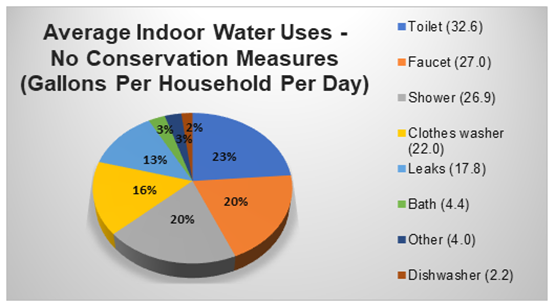
The average family uses more than 300 gallons of water per day at home and 70 percent of this use occurs indoors. Efforts to reduce water consumption are especially important if you have a low yielding well (less than 5 gallons a minute), if you live in a drought region, or in an area of rapid development where groundwater supplies are strained. The following chart shows average indoor water uses with no conservation measures to help you make an informed decision on where you can save water! Keep an eye on the Drought Monitor map throughout the dry months.
Conduct a Household Water Audit
A household water audit is an evaluation of how much water is used and how much water can be saved. This is important for well owners since they do not have a water bill that provides this information. Conducting a water audit involves calculating water usage first. This Water Footprint Calculator can help. It is very thorough and upon completion, you can have the report emailed to you. You can compare your results with the chart above. Consider what the reasons may be for high levels of water use. Are fixtures leaking or are appliances old and inefficient? Or is it the way you use the water (e.g., long showers, half-full loads of laundry)? Continue your water audit by reading through the following simple ways to save water in and around your home.
Change Behavior
Small changes in behavior can also reap major benefits in water conservation and save money by reducing wear and tear on your well and septic system. Just think about the hundreds of gallons of water you are pumping from your well each day to your home. That water is then released from your home which goes to your septic system. These heavy uses will eventually cause expensive repair or replacement and exhaust groundwater resources. Limit demand by spreading out your daily and weekly water uses, such as bathing, watering the garden, and washing dishes or clothes. Remember, even seemingly small measures can save thousands of gallons of water per year. Try using some (or all!) these methods to save:
Inside
Outside
Continue reading our Water Conservation information sheet for additional measures you can take in and around your home.
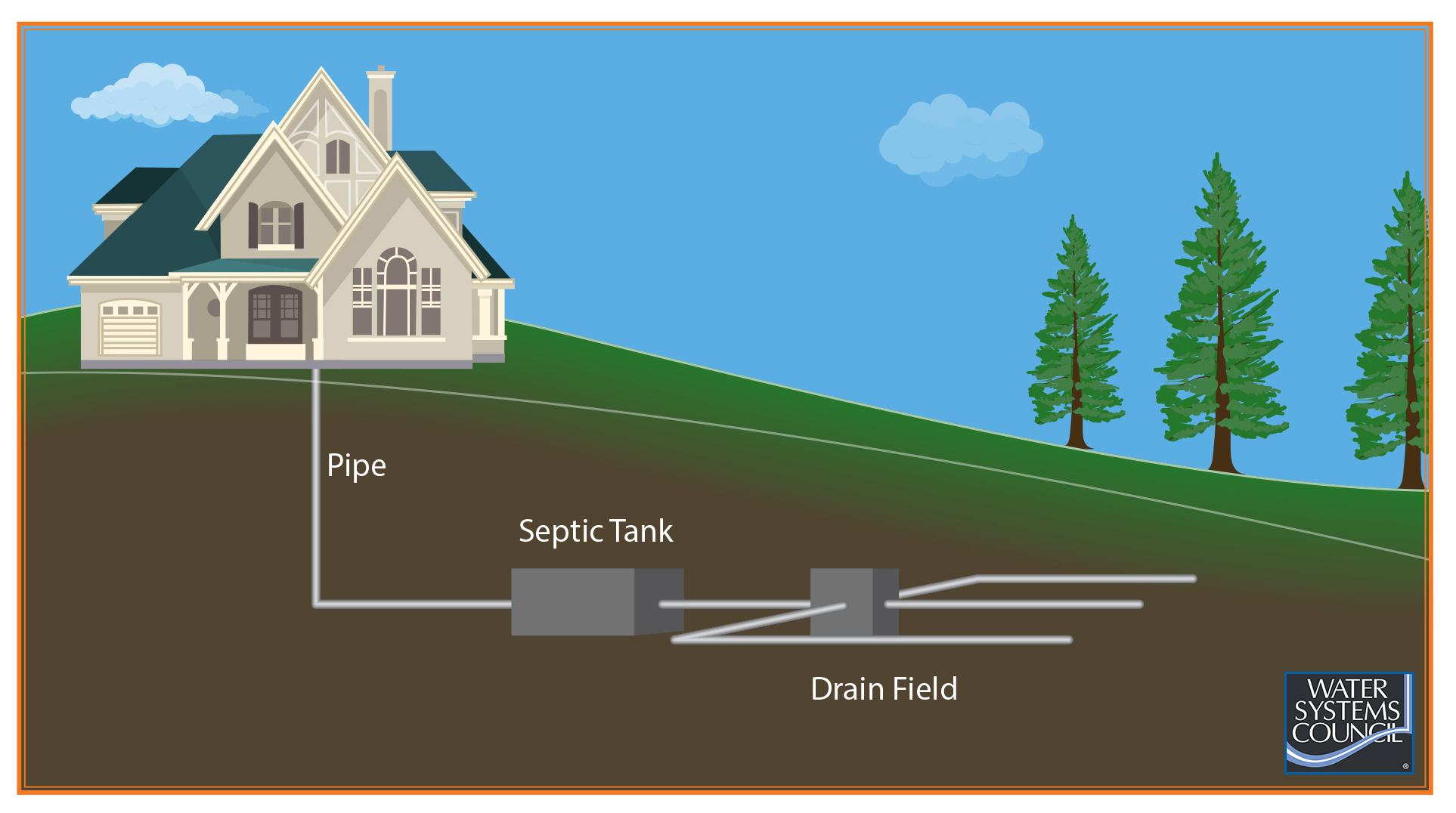
Most states require your septic system to be a minimum of 50 feet away from your well system. However, your local requirements may be different. We recommend that you check with your local or state environmental health department for the location requirements in your area before drilling a well.
If you need assistance locating your environmental health department, contact the wellcare® Hotline.
Testing your well water is important to ensure your water quality is safe for you and your family. Private well owners are solely responsible for the quality of their drinking water, so it is up to you to decide when and how to test your water. Spring is a great time to test your water!
Download our Well Water Testing brochure and information sheet to determine what you should test for, information on contacting a laboratory, steps for sampling, and understanding your test results.
Spring is the perfect time to have your water tested. SimpleLab created Tap Score, a service for easy home water testing and reporting. Tap Score is giving wellcare® Well Owners Network members a discount on their well water testing kits. You can order from the Tap Score website and use the discount code WCNWIN22.
|
|
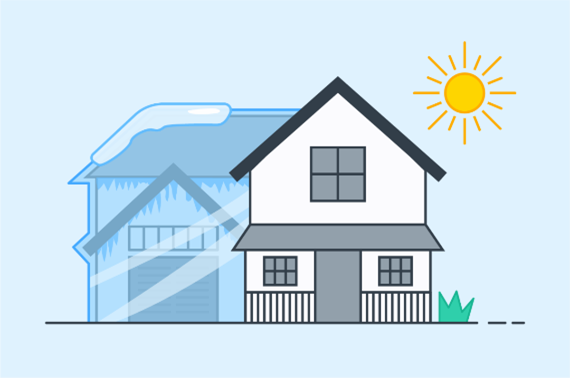
When your home is supplied by a private well system, there are additional steps that need to be taken in order to de-winterize your well components. WSC recommends contacting a licensed well contractor to perform the de-winterization process. If you have a plumber that de-winterizes your home, confirm they are also certified in water wells. If you must de-winterize on your own, there are some important things you need to know.
|